
There’s a comforting lie that runs through eCommerce: the idea that little mistakes only create little problems. Rounding differences. A VAT rate that’s “close enough.” A classification you’re pretty sure matches the product. A tiny component that couldn’t possibly matter.
Cross-border commerce loves to punish that optimism.
So today we’ll talk about one of the best examples in the wild: the €0.50 wristwatch part. An object so unremarkable that merchants assume it lives in the administrative no man’s land marked “surely nothing important happens here.” Yet in regulatory reality it sits on a razor edge of Customs rules, value-based thresholds, HS code logic and tax-on-duty interactions that can turn a half-euro piece of metal into a difference of many euros for your customer.
This is exactly the kind of case where most providers struggle and where ePAL was designed to shine – because cross-border commerce isn’t broken by dramatic events. It’s broken by tiny misclassifications that create big consequences.
A miniature object with oversized regulatory impact
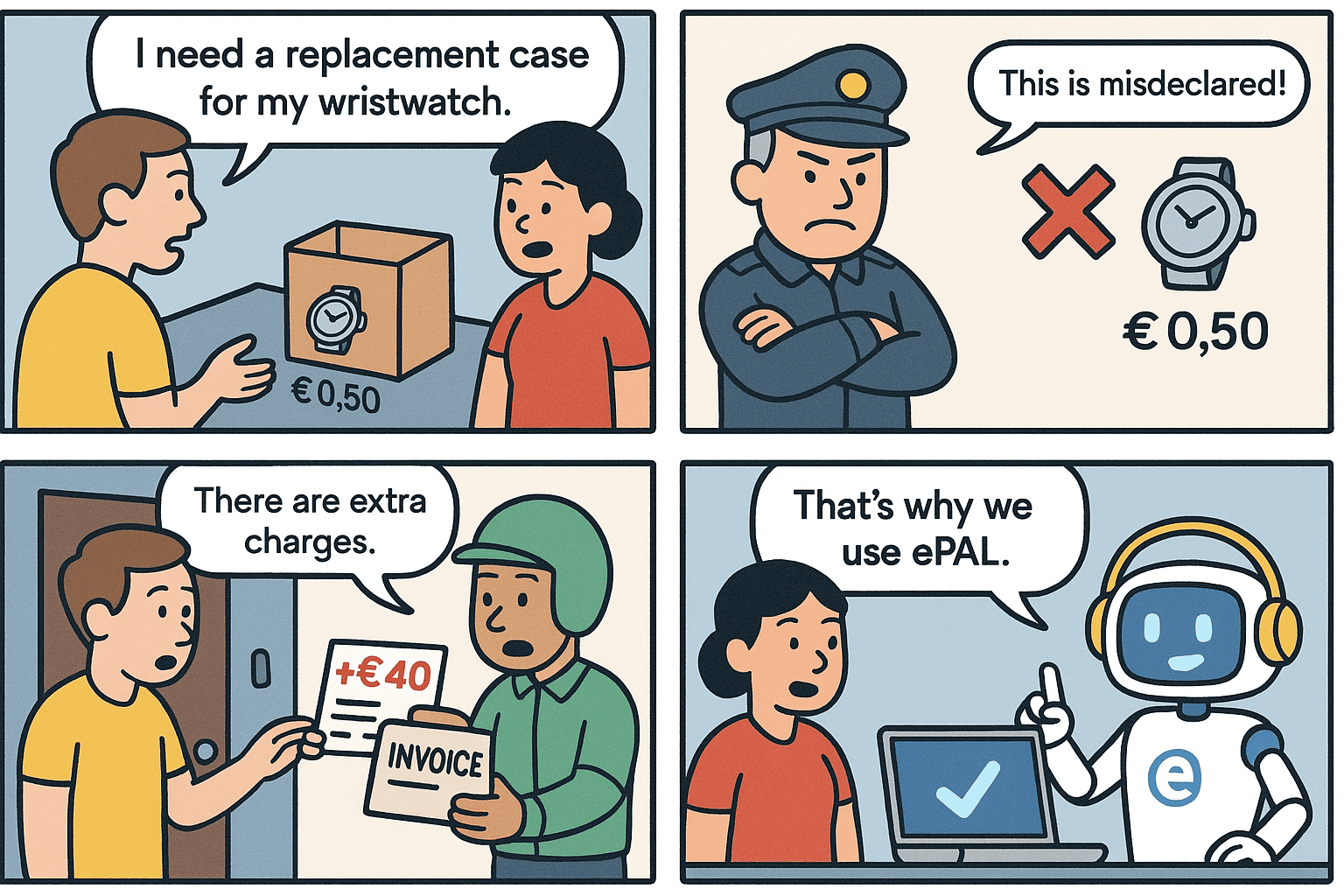
Let’s say you sell wristwatches. One of your customers damaged the case of their watch and needs a replacement case. It weighs almost nothing. It costs nearly nothing. Even shipping would be trivial. It feels like the kind of harmless SKU you’d toss into a padded envelope as a gesture of goodwill and forget about.
But the Customs system doesn’t. This watch case is one of the legendary oddities of cross-border eCommerce.
In most countries a full wristwatch has a straightforward duty rate. But a watch case shipped alone has its own classification rules and its own peculiar calculation for determining duty. In some jurisdictions the logic is something like “apply a €0.50 duty only when €0.50 is less than a specific percentage of the declared value and simultaneously more than a different percentage raten of the same declared value.” (wait… what?).
This is the kind of rule a human will never remember and most tax engines won’t handle, so the merchant confidently applies the duty rate used for complete watches. The carrier takes that data at face value. Customs receives it, recalculates it and decides the shipment is misdeclared. Suddenly a €0.50 part trips a data integrity failure and an additional couple of Euro in Duties which, in turn triggers a Carrier handling charge, a very pissed off customer and a keener Customs eye on future shipments.
Why this matters more than the price tag
The reason the humble watch case becomes a problem is the same reason so many cross-border shipments fail. The system doesn’t care about your intuition. It doesn’t care that the value is small or that the customer isn’t expecting a formal import process. It cares that the rules didn’t match the data.
And when that happens your tiny replacement part can cause:
- customs holds because the declaration “looks wrong”
- recalculated duties that exceed the value of the item
- additional VAT on those recalculated duties
- handling surcharges for manual processing
- a refusal by the buyer who doesn’t want to pay unexpected charges
- a return or destruction of the goods
- a customer support complaint about “fake charges” or “scammy delivery”
- a negative review based on a product that never even made it to the wrist
You don’t lose money on the SKU itself. You lose money on the mess it creates.
In other words: cross-border failure rarely happens at the €500 luxury item. It happens at the €0.50 edge case, because that’s where most systems break.
This isn’t hypothetical. The ecosystem of blogs and customer forums already discuss similar examples of unexpected regulatory treatment, from classification-driven tax miscalculations to tax-on-shipping distortions and mixed-basket anomalies
That’s why ePAL was created. One click (or one API call) solves all of these problems.
To find out more, see www.ePALGlobal.com